


Practical evaluation guide

What is a theory of change? How to develop one and distinguish it from a logic model

An explanation of theories of change, their relationship to logic models, backward mapping, assumptions and use in evaluation.

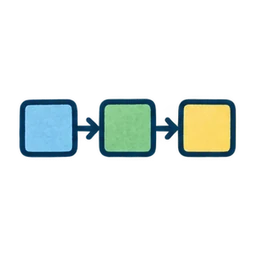
Trace the conditions needed for the desired change

Also check the assumptions, evidence, and external conditions for each link.

The arrows show the order of backward reasoning. They do not prove the program’s causal relationships. Read the full explanation

Main takeaway

A theory of change explains the pathways through which a program is expected to lead to change, together with assumptions, evidence and the external context. It may use a diagram such as a logic model, but also sets out the reasons behind arrows and hypotheses that need testing. [1]

A theory of change is particularly useful for programs addressing social issues or involving multiple organizations. It deals with long-term, complex pathways of change that cannot be explained by simply listing activities and outcomes.

The purpose is not to produce an impressive diagram. It is to clarify which hypotheses the program depends on and identify questions to test through evaluation.

Organize pathways to change and assumptions

Compare models and organize the pathways to change and hypotheses to check.

How it differs from a logic model

There is no uniform boundary between the two. A logic model is one way to diagram a program's flow and can also represent a theory of change. When examining a theory of change, focus on the assumptions and supporting evidence behind each arrow.

Choose the necessary level of detail according to uncertainties in decisions, rather than program scale alone. You can share a concise diagram and add written explanations of important pathways.

How it differs from a logic model
What to organizeWhat to writeQuestions to examine
Change pathwaysA diagram linking activities, outputs and changesAre any necessary intermediate changes missing?
Assumptions and evidenceReasons and sources supporting each arrowWhat remains untested?
Context and other pathwaysExternal support, context and feedback loopsAre there alternative explanations?
[1]

Development: backward mapping

Here we propose backward mapping: work back from long-term goals to the necessary conditions. Compare the pathway with actual existing practice and prior research so that it does not rest on aspirations alone.

Distinguishing what the program directly controls from what depends on the external context helps avoid excessive causal claims in evaluation.

  1. Specify the long-term desired condition
  2. Identify intermediate outcomes that must come first
  3. Organize the sequence and relationships between intermediate outcomes
  4. State the assumptions required for each change
  5. Place the points where the intervention acts on the diagram
  6. Turn hypotheses that need testing into evaluation questions
Practical framework or suggestion

Points to consider in evaluation

It is important not to try to demonstrate the entire theory of change at once. First select important hypotheses, high-risk hypotheses and hypotheses that stakeholders will use for decisions.

For example, if an important hypothesis is that ongoing support changes organizational decision-making, you need to examine changes in meeting structures, budget allocation and decision processes rather than training satisfaction.

  • Turn hypotheses into evaluation questions
  • Check whether assumptions still hold
  • Distinguish outcome time horizons
  • Combine quantitative data and qualitative information
  • Update the theory during implementation
Practical framework or suggestion

Checks before practical use

Before using a theory of change in evaluation, color-code what the program can directly do and what depends on the external context. This makes later explanations easier. Clarify the scope of the program's contribution to avoid overstating effects.

Not every change pathway needs to be measured with the same precision. Prioritize pathways directly relevant to decisions, those where failure would have major consequences, and those on which stakeholders disagree.

  • The long-term goal describes a condition for the target group
  • Assumptions are stated for each outcome
  • Intervention points and external factors are distinguished
  • Important hypotheses have been turned into evaluation questions
Practical framework or suggestion
Fictional example; not actual results

Check assumptions between consultation and use of support

A fictional example for illustration: examine the pathway toward applications for 20 people receiving consultation support.

PathwayRequired conditionsHow to check
Learn about options in consultationInformation fits the person's circumstances and is understandableThe person's explanation and consultation records
Start an applicationSupport is available with documents, time, accompaniment and other needsCheck why people cannot proceed with applications
Use necessary supportMeet the scheme's eligibility requirementsCheck eligibility for use and support from other organizations

What this example supports

If document preparation prevented applications, providing more information alone will not connect the pathway. Revise the conditions and check after the changes.

Common errors in judgment

Assume that adding detail to a diagram strengthens the theory

How to revise: Add evidence and unconfirmed assumptions to important arrows

Reason: Detail alone does not increase causal support.

Draw only pathways favorable to the program

How to revise: Also show conditions in which support does not reach people and pathways through other organizations

Reason: This helps examine the scope of possible contribution.

Put it into practice next

Select the most uncertain arrow and write down evidence and a question for testing it

Frequently asked questions

What is theory of change called in Japanese?

It is generally translated as "henka no riron," meaning theory of change. In practice, the English abbreviation ToC is also often used.

How long does development take?

It depends on the number of stakeholders, existing sources and uncertainty in the issues. Allow separate time to draft pathways initially, investigate unconfirmed assumptions and consult affected people and implementers.

Is a diagram alone enough?

No. A narrative explaining why change is expected along each pathway makes the theory easier to use for evaluation and accountability.

References and checked sections

  1. Magenta Book: Central Government guidance on evaluation
    HM Treasury / Evaluation Task Force · 2026
    Section consulted
    2.2.1 Understanding the intervention (explanation of theory of change)
    How it relates to the text
    Organizing and revising causal pathways, assumptions, existing evidence and context
    Source checked: (includes AI cross-checking)
Content updated: Source checked: (includes AI cross-checking)No documented human reviewIncludes fictional examplesEditorial policy and scope of checkingCite this pageReport a correction

How to cite this page

EvalCompass Editorial Team. “What is a theory of change? How to develop one and distinguish it from a logic model”. EvalCompass, updated 2026-09-13. https://evalcompass.jun-nakatani.com/en/guides/theory-of-change/
Add the date you accessed the page. Text created by this site is available under CC BY 4.0. Quotations, external materials, and bundled fonts have their own terms of use. When reusing content, credit the source, link to the license, and indicate any changes.

Suggest a correction or improvement to this page

Change history
  • — Added links to original sources, scope of definitions, and fictional completed and judgment examples. Revised unsupported advice prescribing fixed counts or timing.